
Employer Hiring Insights • Healthcare

Specialist Doctor Hiring Guide

Designed for Hospital HR Managers, Hospital Administrators, Medical Directors and Clinic Owners responsible for hiring Specialist Doctors.

This employer-focused hiring guide helps hospitals, healthcare organisations, clinics and medical institutions evaluate Specialist Doctors through a structured recruitment framework covering qualifications, clinical competence, organisational fit and practical hiring considerations.

Purpose of this Guide

Provide healthcare employers with a practical framework for assessing Specialist Doctors beyond qualifications, helping improve hiring quality, reduce recruitment risk and support long-term hiring success.
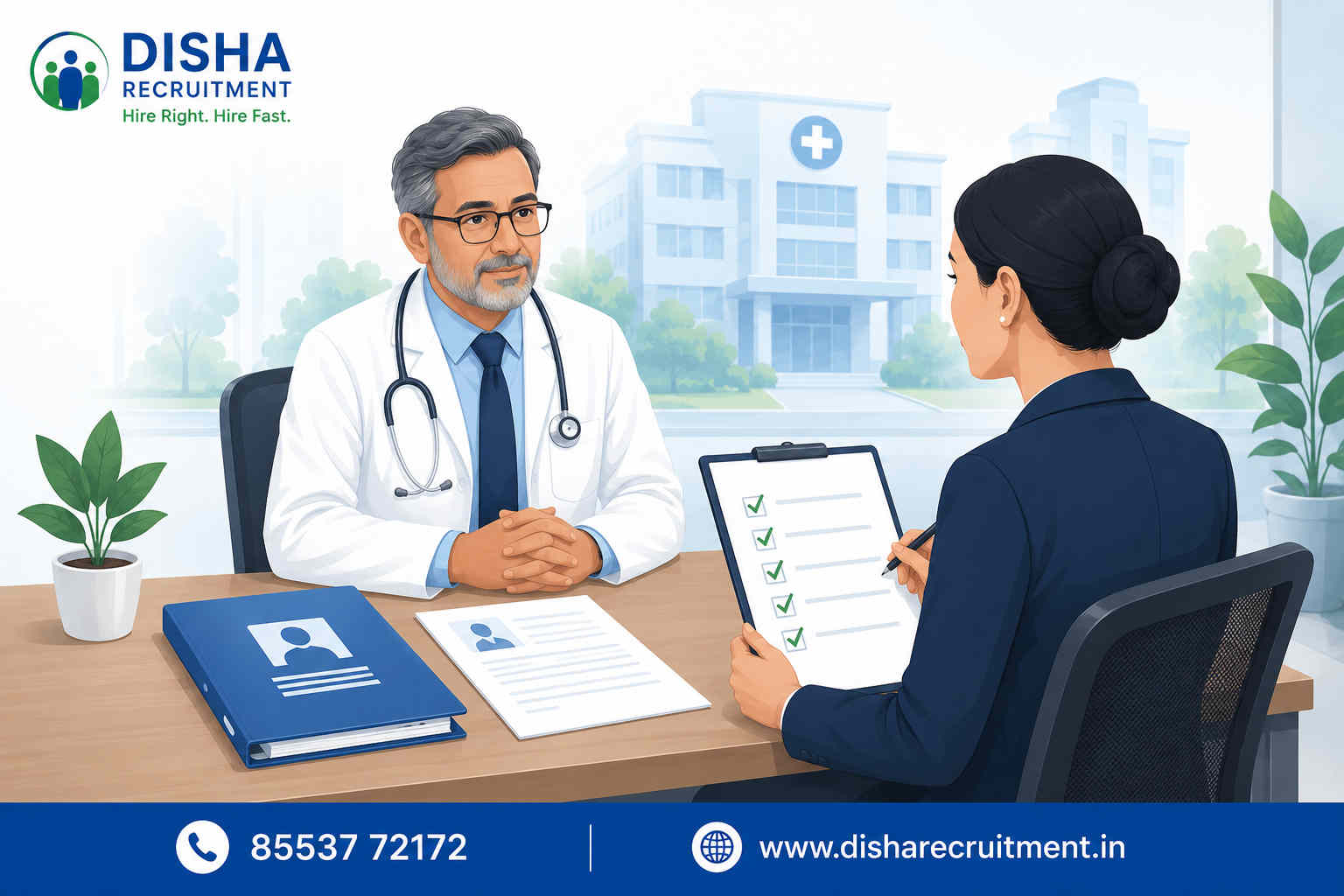
Employer-focused
Practical Hiring Framework
Bangalore Hiring Insights
Specialist Doctor Hiring Guide
Employer Evaluation Framework

Specialist Doctor Hiring Framework

Hiring Specialist Doctors involves much more than reviewing qualifications. A structured recruitment process helps healthcare employers evaluate professional competence, organisational suitability and hiring readiness before making a final appointment.

STAGE 1

Before Shortlisting

Verify Qualifications & Clinical Experience

Review educational qualifications, speciality certifications, medical registrations and relevant clinical experience before preparing the shortlist.

STAGE 2

Candidate Evaluation

Assess Clinical Competence & Professional Behaviour

Evaluate clinical judgement, communication, ethics, decision-making, teamwork and patient interaction.

STAGE 4

Final Verification

Documentation & Hiring Readiness

Complete reference checks, credential verification, compliance requirements, offer confirmation and joining readiness.

STAGE 3

Before Making an Offer

Assess Employment Suitability & Long-Term Fit

Review compensation, notice period, career aspirations, location preference and long-term organisational fit.

Employer Tip

A structured evaluation process helps employers reduce hiring risks by reviewing qualifications, behavioural suitability and joining readiness before making a final hiring decision.

Inside the Hiring Framework

Explore each stage of the recruitment process with practical evaluation guidance, employer tips, common hiring mistakes and recruitment insights to support more informed hiring decisions.

STEP 01

Before Shortlisting

Verify Qualifications & Clinical Experience

A structured review before shortlisting helps healthcare employers identify qualified candidates early, improve shortlist quality and reduce unnecessary interviews and recruitment delays.

Qualifications

VERIFY
  • MBBS Qualification
  • MD / MS / DNB Degree
  • Relevant Fellowships
  • Additional Certifications

Medical Registration

Confirm compliance
  • Medical Council Registration
  • Valid Licence Status
  • Speciality Registration
  • Supporting Documents

Clinical Experience

Assess relevance
  • Relevant Speciality Experience
  • Clinical Responsibilities
  • Procedures Performed
  • Case Complexity

Hospital Exposure

Review suitability
  • Hospital Type
  • Department Experience
  • Patient Volume
  • Team Collaboration
Common Hiring Mistake

Shortlisting Specialist Doctors primarily based on total years of experience without verifying speciality qualifications, medical registration and relevant clinical exposure may result in unnecessary interviews, delayed hiring decisions and weaker candidate selection.

Employer Tip

Develop a standard verification checklist and apply the same evaluation criteria for every shortlisted Specialist Doctor. A structured review process improves hiring consistency, reduces selection bias and helps identify the most suitable candidate with greater confidence.

Quick Verification Checklist

MBBS Qualification
MD / MS / DNB Qualification
Valid Medical Registration
Relevant Speciality Experience
Hospital / Department Experience
Supporting Documents
DISHA Recruitment Insight

Successful Specialist Doctor hiring depends on much more than qualifications and medical registrations.

While educational qualifications and statutory registrations establish professional eligibility, hospitals should also evaluate speciality relevance, clinical exposure, communication skills, notice period, organisational suitability and long-term commitment before extending an offer.

Assessing these factors together enables more focused interviews, improves offer acceptance rates and supports better long-term hiring outcomes.

— DISHA Recruitment
STEP 02

Candidate Evaluation

Assess Clinical Competence & Professional Suitability

After verifying qualifications, medical registrations and clinical experience, the next stage is evaluating whether a Specialist Doctor possesses the clinical competence, communication skills, professional behaviour and organisational suitability required for long-term success within your hospital.

Clinical Competence

Evaluate core medical capability before progressing further
Clinical decision-making and judgement
Diagnostic reasoning and case evaluation
Treatment planning and patient management
Ability to manage speciality-specific clinical cases

Communication & Patient Care

Patient communication
Family interaction
Team collaboration
Clinical documentation

Professional Behaviour

Medical ethics
Accountability
Leadership & teamwork
Professional reliability

Organisational & Long-Term Fit

Beyond clinical ability, hospitals should evaluate department compatibility, notice period, willingness to work assigned shifts, long-term commitment and alignment with organisational values. These factors significantly influence retention, team stability and overall hiring success.

Common Hiring Mistake

Evaluating Specialist Doctors primarily on technical knowledge while overlooking communication skills, professional behaviour, teamwork, ethical decision-making and organisational suitability may result in poor patient experience, reduced collaboration with clinical teams and long-term retention challenges.

Employer Tip

Assess every shortlisted Specialist Doctor using a structured interview scorecard that evaluates clinical competence, communication skills, professional behaviour and organisational suitability. Applying consistent evaluation criteria across all candidates improves hiring objectivity, supports fair decision-making and helps identify the most suitable doctor for long-term success.

Candidate Evaluation Checklist

Clinical competence assessed
Communication skills evaluated
Professional behaviour observed
Ethical decision-making discussed
Team collaboration assessed
Organisational suitability confirmed
DISHA Recruitment Insight

Successful Specialist Doctor hiring depends on balancing clinical expertise with professional behaviour, communication skills and long-term organisational fit.

Clinical knowledge alone does not determine long-term success within a healthcare organisation. Hospitals should evaluate how effectively a Specialist Doctor communicates with patients, collaborates with multidisciplinary teams, demonstrates ethical decision-making and adapts to the organisation's clinical culture.

A structured evaluation process helps employers make more informed hiring decisions, improves patient care standards and contributes to stronger doctor retention over the long term.

— DISHA Recruitment
STEP 03
Before Making an Offer

Employment Suitability & Long-Term Fit

Assess Employment Readiness Before Extending an Offer

Before making a formal employment offer, hospitals should evaluate whether the shortlisted Specialist Doctor is professionally, personally and practically prepared to join the organisation. Beyond clinical competence, factors such as notice period, compensation expectations, relocation feasibility, career aspirations and long-term commitment can significantly influence offer acceptance and employee retention.

Compensation Expectations

Salary alignment
  • Current compensation
  • Expected salary
  • Benefits and incentives
  • Budget compatibility

Why this Matters

Early salary alignment helps minimise offer rejection and unnecessary negotiation delays.

Notice Period & Joining

Joining readiness
  • Notice period
  • Earliest joining date
  • Buyout possibility
  • Availability confirmation

Why this Matters

Joining delays can affect manpower planning, department scheduling and patient services.

Location & Relocation

Practical suitability
  • Daily commute feasibility
  • Relocation willingness
  • Family considerations
  • Shift suitability

Why this Matters

Practical location planning improves retention and reduces early resignations.

Career Motivation

Long-term commitment
  • Career objectives
  • Reason for job change
  • Organisation alignment
  • Long-term career plans

Why this Matters

Understanding career motivation helps identify candidates who are more likely to remain with the organisation for the long term.

Common Hiring Mistake

Extending an employment offer before confirming salary expectations, notice period, joining availability, relocation readiness and long-term career commitment may result in offer rejection, delayed onboarding, last-minute withdrawals or early employee turnover.

Employer Tip

Before extending an employment offer, confirm salary expectations, notice period, joining availability and long-term career interest with the shortlisted Specialist Doctor. A structured pre-offer discussion reduces misunderstandings, improves offer acceptance rates and helps hospitals appoint candidates who are genuinely prepared to join and contribute over the long term.

Offer Readiness Checklist
Salary expectations confirmed
Notice period verified
Joining timeline agreed
Location and shift suitability confirmed
Long-term career interest discussed
Offer approval ready
DISHA Recruitment Insight

The strongest candidates are not always the ones who accept the offer. Successful hiring depends on identifying doctors who are both professionally qualified and genuinely prepared to join your organisation.

Many hospitals invest considerable time evaluating clinical competence but spend comparatively little time understanding the candidate's employment readiness. Salary expectations, notice period, family commitments, relocation plans and long-term career goals often become the deciding factors after an offer is made.

Before issuing an offer, discuss practical expectations openly and encourage candidates to share any concerns that could affect their joining decision. Addressing these topics early helps reduce offer declines, delayed onboarding and last-minute withdrawals while creating a more transparent recruitment process for both the employer and the candidate.

Recruitment is complete only when the right Specialist Doctor successfully joins, integrates into the clinical team and continues to contribute over the long term.

— DISHA Recruitment
Employer FAQ

Employer Questions on Specialist Doctor Recruitment

Answers to common questions healthcare employers ask when planning, evaluating and recruiting Specialist Doctors.

Understanding Specialist Doctor Recruitment

What is a Specialist Doctor? +

A Specialist Doctor is a medical professional who has completed postgraduate training in a specific medical or surgical specialty after obtaining an MBBS degree and provides advanced diagnosis, treatment and patient care within that specialty.

Which qualifications should employers verify before shortlisting? +

Employers should verify MBBS qualification, MD/MS/DNB degree, specialty certifications, medical registration, clinical experience and supporting credentials before progressing candidates to interviews.

Why is credential verification important? +

Verification helps reduce hiring risks, improves shortlist quality, supports regulatory compliance and enables better recruitment decisions.

Specialist Doctor Hiring Guide

What factors should hospitals evaluate during interviews? +

In addition to qualifications, hospitals should evaluate clinical competence, professional behaviour, communication, decision-making, team collaboration and long-term organisational suitability.

How long does Specialist Doctor recruitment usually take? +

Recruitment timelines depend on specialty, candidate availability, notice period, interview schedules and hospital approval processes.

Besides qualifications, what else should employers assess? +

Hospitals should also assess hospital exposure, case complexity, professional ethics, career goals, joining timeline and overall long-term fit.

Recruitment Support

Can DISHA Recruitment help hospitals hire Specialist Doctors? +

Yes. DISHA Recruitment supports hospitals, clinics and healthcare organisations in recruiting Specialist Doctors through candidate sourcing, screening, credential verification and structured shortlisting.

Can DISHA Recruitment assist with hiring Radiologists and other medical specialists? +

Yes. We assist healthcare employers in recruiting Radiologists and a wide range of medical specialists based on their specialty, experience and organisational requirements.

Continue Reading

Continue Exploring Employer Hiring Guides

Explore more employer-focused hiring guides and recruitment resources designed to help organisations make informed hiring decisions across office staff and healthcare roles.

Need Further Hiring Guidance?

Every hospital and healthcare organisation has unique hiring requirements. If you're planning to recruit Specialist Doctors, our recruitment team can help you identify suitable candidates, discuss your hiring requirements and support your recruitment process.

You can also discuss your hiring requirements with our recruitment team.